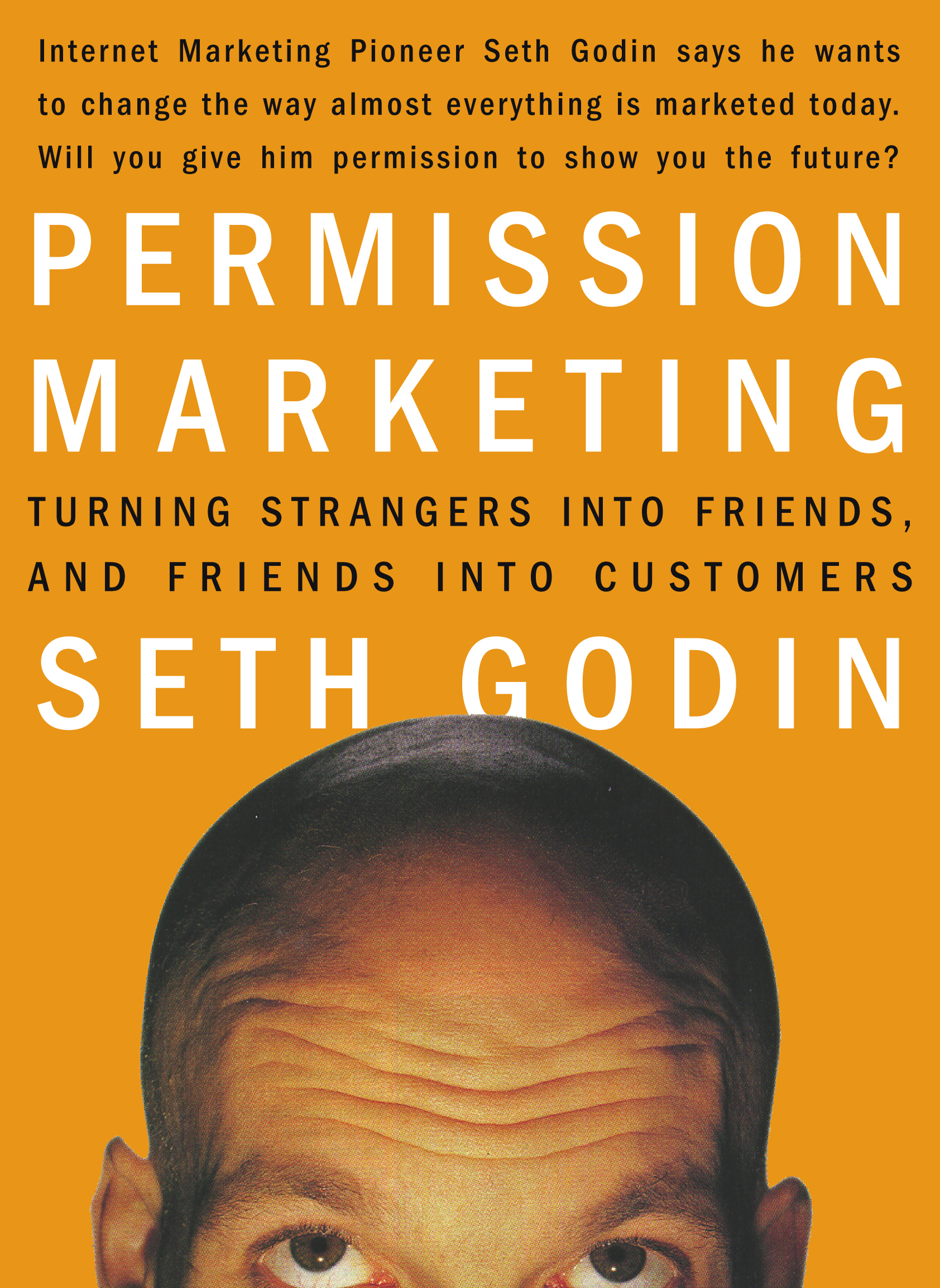
Permission Marketing
Earn the invitation.
Build relationships with people who choose to hear from you. A memorable phrase makes an approach to marketing easy to recognize, explain, and discuss.
“Have we earned permission to be here?”

One powerful concept can become the foundation of your reputation, your body of work, and your career as a thought leader.
MODELS helps you create unique, world-changing Trademark Ideas that become the centerpiece for your thought leadership. BlockbusterOS turns those ideas into world-class content.
High quality. High quantity. Your thinking and your voice. AI makes that combination more achievable when it has a system to work within.
Coming in November: the AI Blockbuster course.
Your distinctive concepts and frameworks: the ideas you want to be known for.
Turn them into articles people can understand, remember, and share.
01 / The power of a Trademark Idea
A Trademark Idea is a distinctive, memorable concept that gives people a useful way to understand something. It becomes language they can use in their own work.
These books show the power of that association. Permission Marketing, The Lean Startup, and The Black Swan give readers memorable concepts to connect with their authors’ larger bodies of work. An idea becomes a way to discover, remember, and recommend the thinker behind it.
Earn the invitation.
Build relationships with people who choose to hear from you. A memorable phrase makes an approach to marketing easy to recognize, explain, and discuss.
“Have we earned permission to be here?”
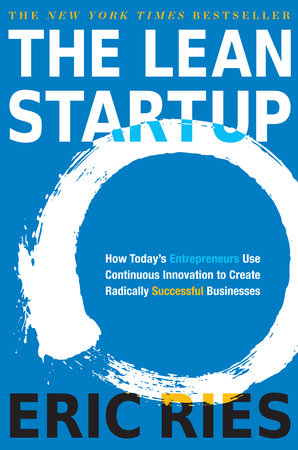
Make learning part of building.
Test assumptions through small experiments and customer feedback. The name gives founders a shared language for learning what to build before investing too much.
“What is the smallest test that would help us learn?”
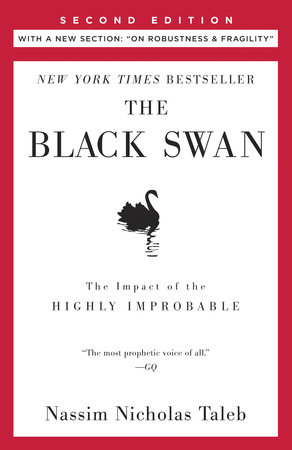
Take the unexpected seriously.
Pay attention to rare, consequential events that surprise us and seem explainable afterward. The image of a black swan gives a difficult idea a memorable name.
“What important surprise are we overlooking?”
The questions above are our illustrations of applying each idea, not quotations. Covers link to the publishers’ book pages.
When people associate a useful idea with your name, they have a reason to seek out your work, recommend you to a colleague, or invite you to help them apply it. That recognition can lead to clients, collaborations, books, and teaching opportunities.
A Trademark Idea can become the foundation of a thought leadership career because you can keep deepening it, demonstrating it, and bringing it to new audiences.
Creating that kind of idea takes more than a memorable name. Examine the assumptions in your field. Connect knowledge from different places. Develop a useful explanation, test its support, and make clear where it applies. Then give it language people can remember.
Read Michael’s essay on concept marketing02 / Why Blockbuster
Think of the last article you sent to a friend. Something made it worth passing along: an idea that changed how you saw a problem, a story you couldn’t forget, or an explanation you wanted to use.
That is the opportunity behind the Blockbuster approach. An exceptional piece can earn attention, trust, and lasting readership well beyond the moment it is published. Each reader who shares it can help it reach people who have never heard of you.
A blockbuster article gives an important idea a compelling, deeply developed expression. The work goes into choosing the idea, strengthening the evidence, finding the right story, and making the explanation worth someone’s time.
How a piece can keep working
A clear argument, memorable language, evidence, and examples.
Possible paths of spread, not a forecast of reach. A useful idea and a clear explanation give readers something worth carrying forward.
One piece can introduce your central idea. Another can explain the mechanism. A third can show an application, answer a difficult question, or refine the original argument. Readers have reasons to move between them.
That changes where you invest your effort. Choose ideas that deserve sustained attention. Give them enough research and revision to become useful reference points. Keep learning from the response.
Read Michael’s original Blockbuster essay03 / AI changes the production equation
For an expert writing largely alone, quality and quantity have often competed for the same hours. More research, better examples, and another round of editing mean a longer wait before publication. Publishing more frequently can put pressure on that work.
AI changes what those hours can accomplish. It can help retrieve material, explore angles, compare explanations, assemble drafts, and run focused editing passes. Work that once required repeated manual effort can become part of a reusable process.
The opportunity is to reduce the effort of production and reinvest it in the work that matters: deeper thinking, stronger articles, a more consistent publishing cadence, or a combination of all three.
A conceptual map of the ambition
The direction we are working toward, not measured BlockbusterOS results. AI can ease the tradeoff; it does not remove the need for judgment and revision.
Your experience supplies the material. Your perspective gives it a direction. Your standards determine what is good enough to publish. A system can make these inputs reusable across many pieces.
This matters because access to the same AI can pull writers toward similar ideas. A 2024 short-story experiment found that AI ideas improved individual creativity ratings while making the stories more alike. Your source material, independent thinking, and editorial choices remain important parts of differentiation. Read the study.
BlockbusterOS is built around that practical challenge: give AI your knowledge, your thinking patterns, and your voice, then put the resulting work through research and review.
04 / Inside BlockbusterOS
The system supports the work before, during, and after a draft. Its reusable instructions and organized source material let each piece draw on more of what you know.
A practical way to see how the components support an article
Second Brain
Expertise Extraction
Strategy
Article Selection
Deep Research
Instant Publishing
Cognitive Signature
Trademark IP · Voice
Rigor & Editing
Carry the useful work forward. Research, examples, and refined ideas return to your knowledge library for future articles.
A workflow overview, not a rigid sequence. Research and revision can send you back to the idea itself.
Bring your past articles, notes, transcripts, and other source material into a searchable, AI-readable library. Your next piece can build on work you have already done.
What it buildsA knowledge library organized for retrieval and reuse.
Surface the methods, insights, mental models, stories, and unfinished ideas inside your existing work. Make tacit expertise explicit enough to develop and teach. Examine gaps in your reasoning and the problems your audience actually describes.
What it buildsA map of your methods, signature insights, stories, and candidate ideas.
Clarify who you want to reach, what you want to be known for, where you will publish, and how your topics fit together. Connect what interests you with what your audience needs. Decide which pieces establish the foundation for later work.
What it buildsPositioning, an audience profile, a platform plan, and a topic sequence.
Use BlockbusterBench, an article evaluation tool, to compare candidate ideas and develop a prioritized roadmap of 10–15 articles. Consider both the idea’s appeal and its fit with your larger direction. Treat scores as input to editorial judgment.
What it buildsA scored candidate list and a prioritized publishing roadmap.
Turn voice notes, unfinished drafts, and existing material into structured first drafts. Bring in relevant examples and stories from your library. Establish a publishing process and cadence that fit your actual week, with review before publication.
What it buildsA repeatable drafting process and a practical publishing cadence.
Gather evidence, explore adjacent fields, and examine counterarguments. Research the immediate article and the underlying framework. Return useful findings to your knowledge library so related work can build on them.
What it buildsResearch briefs, supporting sources, and counter-evidence to examine.
Document the reasoning patterns that make your perspective distinctive: the models you use, the connections you notice, and the way you build an argument. Give AI direction at the level of thought as well as tone.
What it buildsA reusable profile of your analytical lenses and thinking patterns.
Develop named concepts, memorable lines, titles, visuals, and article formats that help readers recognize and share your work. Connect the language to a substantive idea and the field you want to contribute to.
What it buildsA library of named concepts, quotable lines, titles, and formats.
Explore five voice blends and build a reusable voice profile. Give AI concrete direction on tone, rhythm, sentence patterns, and expression. Develop a range for different formats while keeping a recognizable voice.
What it buildsA voice profile and a library of variations for different contexts.
Apply more than twenty structured editing passes across claims, clarity, logic, hooks, readability, and prose. Use fact-checking and source-verification protocols to challenge the draft. Resolve the important weaknesses before putting your name on it.
What it buildsAn editing workflow and protocols for checking claims and sources.
System detail from Michael’s earlier one-on-one BlockbusterOS overview. November course details will be shared separately.
05 / A project, from experience to publication
Imagine a leadership coach who keeps seeing the same problem: teams leave meetings with a long action list, but no clarity about who owns the decision.
Bring together permissioned, appropriately anonymized notes, past writing, and observations. Look for recurring situations, the coach’s explanations, and the interventions that seemed to help. Separate observed results from interpretation.
A meeting can feel productive while leaving its central decision unfinished.
Use MODELS to explore different explanations. Is the problem an unclear goal, missing information, or an undefined decision owner? Research alternatives and exceptions. Try language that captures the useful distinction.
The Unfinished Meeting: a meeting that ends with activity assigned but the decision still unowned.
Use BlockbusterOS to assemble the strongest example, explain the mechanism, bring in relevant evidence, and give readers a way to apply the concept. Explore openings and structures, apply the coach’s voice, and edit the claims.
The familiar meeting → the hidden problem → the concept → evidence and exceptions → a practical decision checklist.
One article introduces the concept. A follow-up examines a difficult case. A visual explains the decision process. A short post makes the central distinction easy to share. Each format gives readers a different way into the same body of thinking.
Illustrative workflow and draft concept, not a customer result. The example shows how the parts connect; it does not claim the concept is new or that every project follows this path.
What is the idea you want your name to stand for?
Apply to learn more06 / Who it’s for
BlockbusterOS is for thought leaders, coaches, consultants, founders, and experts who want their ideas to reach more people.
Bring a field you care about, experience to draw from, and a willingness to question and improve the work. Those are valuable inputs to the system.

A note from Michael
“You know more than you’re publishing.”
That observation opens my BlockbusterOS overview. Your best frameworks may be in your head, your notes, or conversations with clients. The distance between having the expertise and publishing something you are proud of can feel enormous.
The Blockbuster approach asks you to take your strongest ideas seriously. BlockbusterOS gives you a process for developing and expressing them with AI support. The ambition is to help more of your best thinking become work that other people can learn from.
Michael Simmons
Creator of BlockbusterOS & MODELS
Before you apply
MODELS helps you construct, question, and revise the ideas themselves. BlockbusterOS supports turning those ideas into researched, clearly expressed, carefully edited content. Developing an idea and expressing it often send you back to each other.
The system supplies context that a short prompt usually leaves out: your archive, your audience, your strategy, your thinking patterns, and your voice. It also separates selection, research, drafting, and editing into work you can inspect and improve.
No. The aim is more work that meets your standards. Faster preparation and drafting can leave room for deeper research, more alternatives, and stronger revision. You still decide what deserves publication.
An AI Blockbuster course is coming in November. Apply to learn more about the course and BlockbusterOS. Exact dates, format, pricing, and what the course includes will be shared separately.
The link opens the application form so you can share your background and goals. There is no course checkout on this page.
Coming in November
Learn about creating blockbuster content with the support of AI. Bring the idea you want to be known for, the expertise you have accumulated, and the ambition to build a body of work around it.
Apply to learn more about BlockbusterOS and the upcoming course.
Applying is an expression of interest. Course dates, format, and pricing will be shared separately.
Tell us about your expertise and the idea you want to develop. The application opens in Google Forms.
Apply to learn more